
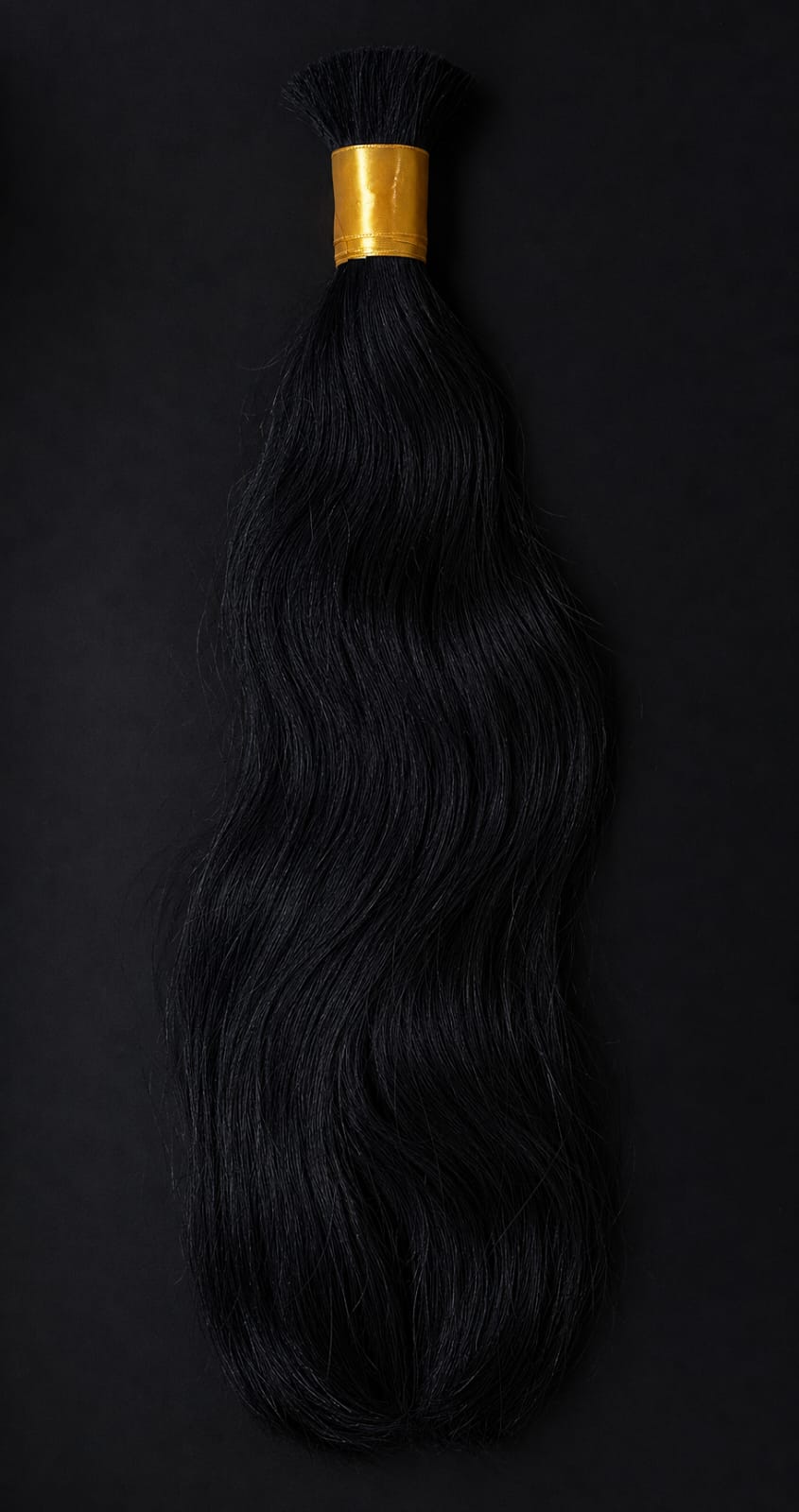
Filipino Hair: A Buyer's Guide to Raw and Virgin Filipino Hair
What Filipino hair is, how raw and virgin Filipino hair differ, how to spot rebonded or mixed hair, and what to check before you buy from a Filipino hair vendor.
Filipino hair has become one of the most requested origins among salon owners, wig makers and hair brands in the United States and Europe. It is valued for its natural thickness, its dark natural colour and the way it blends with many hair types. But "Filipino" on a label is only a claim. This guide explains what Filipino hair is, how raw and virgin Filipino hair differ, where buyers most often get misled, and what to check before you place an order.
What Is Filipino Hair?
Filipino hair is human hair collected from donors in the Philippines. Most of it reaches the market in one of two ways: directly from donors who sell their hair, or through local collectors who buy hair in towns and provinces and resell it in larger lots. Either way, the origin describes where the hair was collected — it does not by itself describe the quality, the processing history or the length consistency of a bundle.
Typical Characteristics of Filipino Hair
Every donor is different, so there is no single "Filipino texture". Hair collected in the Philippines is commonly described by buyers as:
• Naturally dark — usually natural black to dark brown • Thick strands with good body • Naturally straight to slightly wavy • Durable when it has not been chemically treated
These are tendencies, not guarantees. A serious vendor describes the actual bundle in front of you — length, weight, colour and texture — instead of relying on the country name.
Raw vs Virgin Filipino Hair
The two terms are often used as if they mean the same thing. They do not, and neither is regulated by a universal standard.
Raw Filipino hair usually means hair cut from a donor and kept as close as possible to its original state: not chemically processed, not steamed into a new pattern, often collected from a single donor.
Virgin Filipino hair usually means hair that has never been chemically treated — no dye, no bleach, no perm, no relaxer, no rebonding. Some suppliers still apply washing or steaming and call the result "virgin".
The practical rule: ask the vendor to state in writing every step applied to the hair after it was cut. For a fuller explanation, see our article "Raw Hair vs Virgin Hair: What Buyers Need to Know Before Ordering" on the Imperial Hair Group blog.
Single Drawn vs Double Drawn
Single drawn hair keeps most of the hairs from the donor's ponytail, including shorter ones, so the bundle gets thinner towards the ends. Double drawn hair has most of the short hairs removed, so the bundle is close to the same thickness from root to tip. Double drawn hair takes more work and more raw material per finished gram, which is why it costs more — and why it is preferred for full-looking extensions and wigs.
The Biggest Risk with Filipino Hair: Rebonding
Rebonding (chemical straightening) is very common in the Philippines. Hair that has been rebonded is no longer virgin hair, even if it was never dyed. It may look perfectly straight and shiny, but the chemical treatment changes how the hair behaves after washing and styling. For a buyer, rebonded hair sold as "virgin" is one of the most common and most expensive mistakes.
Signs that hair may have been chemically treated:
• Unnaturally flat, glossy straightness along the whole length • A different texture or shine near the root compared with the lengths • A chemical smell when the hair is wet • Colour differences between root and length that suggest dye
Mixed or Mislabelled Hair
The hair trade openly discusses hair from other countries being sold as Filipino, and lots that mix origins. You cannot verify origin from a photo. What you can do is buy from a vendor who explains exactly how and where the hair is collected, and start with a sample.
How to Check Filipino Hair Before You Buy
• Length — measured root to tip, unstretched • Weight — per bundle, in grams, on a scale • Ends — are they full (double drawn) or thin (single drawn)? • Cuticle — run your fingers from root to tip (smooth) and tip to root (slight resistance) • Smell — wash a strand; there should be no chemical smell • Burn test on a few hairs — human hair burns to ash and smells like burnt hair; synthetic fibre melts into a hard bead • Behaviour after washing — the texture should stay the same
Questions to Ask a Filipino Hair Vendor
• Where in the Philippines is the hair collected, and how? • Has this hair ever been dyed, permed, relaxed or rebonded? • Is it single drawn or double drawn? • What is the exact length and weight of each bundle? • Can I see a video of the actual bundle on a scale and next to a measuring tape? • Where will the order ship from, and how long will it take to reach me?
A reliable vendor answers these questions clearly and in writing.
Filipino Hair vs Vietnamese and Indian Hair
Buyers often compare Filipino hair with Vietnamese and Indian hair. Vietnamese hair is widely traded and is frequently sold as straight, silky bundles; Indian hair is often associated with temple collections and naturally wavy textures. Filipino hair is usually chosen for its natural thickness and dark colour. In practice, the processing history and drawing method matter more than the country — an unprocessed, double drawn bundle from any origin will outperform a chemically treated one.
How Imperial Hair Group Supplies Filipino Hair
Imperial Hair Group is based in Iloilo in the Visayas region of the Philippines. Our collection consists of double drawn Filipino virgin hair that has never been chemically processed — no dye, no perm and no rebonding. Every product listing states the exact length and weight of the bundle.
We hold stock both in the Philippines and in Poland (EU). Orders to the USA can ship directly from the Philippines; orders within Europe can ship from Poland. Prices are quoted per order — send an enquiry through "Request a Quote" with the lengths, weights and quantities you need.
Browse the current collection: https://imperialhairgroup.com/collection
Frequently Asked Questions
Is Filipino hair good for extensions and wigs? Yes. Its thickness and natural dark colour make it a popular choice for extensions, wigs and toppers, especially when it is unprocessed and double drawn.
Can Filipino hair be coloured? Unprocessed Filipino hair can usually be lifted and coloured by a professional. Because it is naturally dark, lightening it to blonde takes time and care.
How long does Filipino hair last? With proper care, unprocessed human hair can last much longer than processed hair. Lifespan depends on how it is installed, washed and heat-styled.
What is the difference between Filipino hair and "Filipino hair extensions"? Filipino hair is the raw material. Extensions are the finished product — wefts, tape-ins, keratin tips or wigs made from that hair.